
Comparison · Chat & code
Claude Opus 5.5 vs GPT-6 Astra
Claude Opus 5.5 vs GPT-6 Astra: token rates, cached input, Claude Code support and context. Find out which flagship fits your agents and your tools.
What each one accepts
| Claude Opus 5.5 | GPT-6 Astra | |
|---|---|---|
| Vendor | Anthropic | OpenAI |
| Type | Chat & code | Chat & code |
| Released | 2026-09 | 2026-09 |
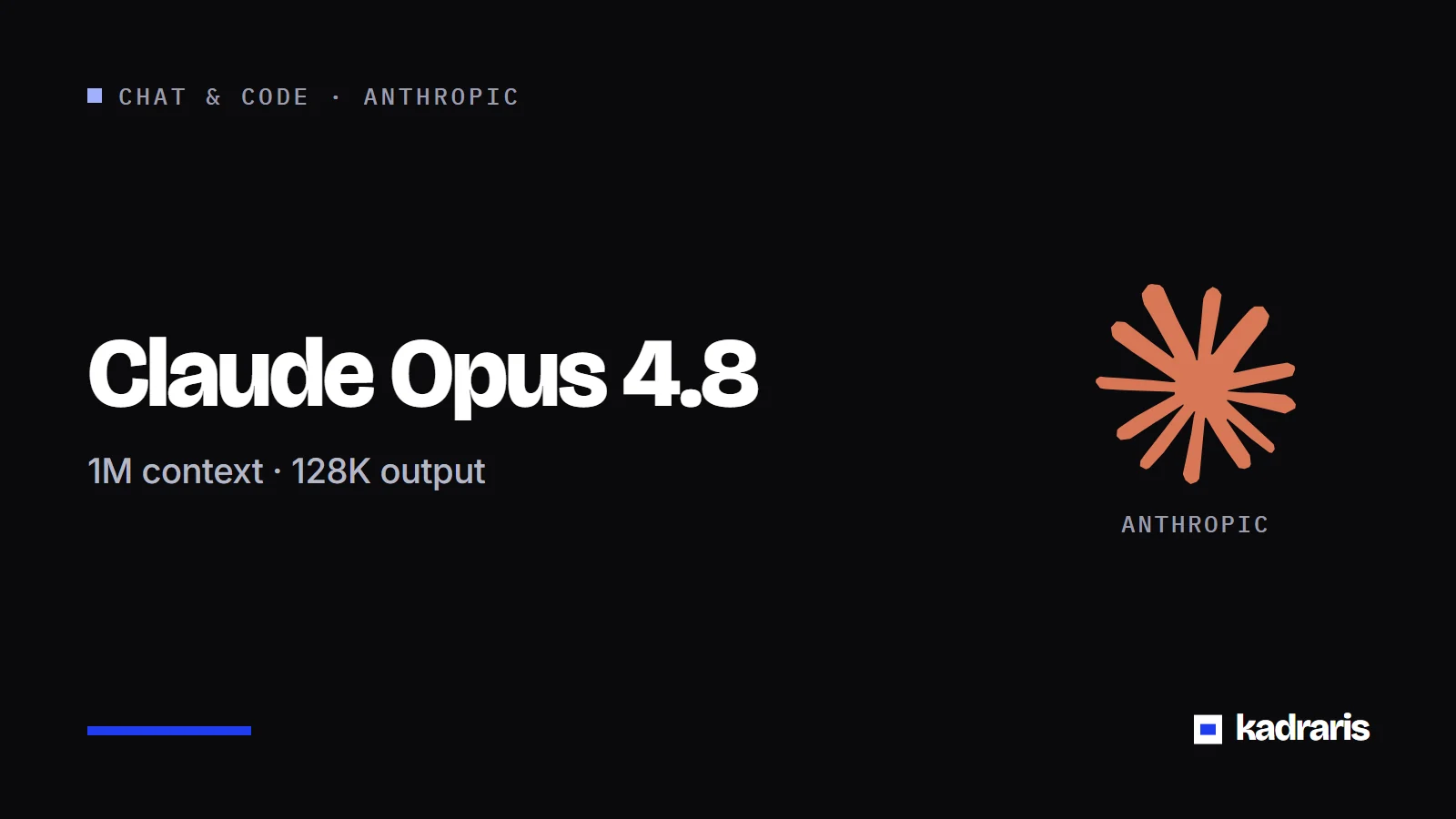
| Context window | 1,000,000 tokens | 1,050,000 tokens |
| Max output | 128,000 tokens | 128,000 tokens |
| Endpoints | /v1/chat/completions · /v1/messages | /v1/chat/completions |
Token prices
| Claude Opus 5.5 | GPT-6 Astra | |
|---|---|---|
| Input / 1M tokens | $3.78 | $10.80 |
| Output / 1M tokens | $18.90 | $54.00 |
| Input from cache / 1M | $0.189 | $1.08 |
| 1,000 replies, 1,500 in / 400 out | $13.23 | $37.80 |
Charged from a prepaid USD balance, no taxes added. One key runs both, through /v1/chat/completions in the OpenAI format. A failed generation is $0.
If you live in Claude Code or rewrite large codebases, start with Opus 5.5: its regular rates are lower than Astra's, and only Opus speaks the /v1/messages format. GPT-6 Astra fits the hardest jobs inside OpenAI-compatible tools, especially when the same long prefix goes out with every request. Context and output limits are almost the same, so cost, cache use and tooling decide.
When to pick Claude Opus 5.5
- You run long agent sessions in Claude Code.
- A refactor or migration reaches hundreds of files.
- Your code already uses the Anthropic SDK, and you only want to change the base URL and key.
- Prompts are short and answers are long, so the output rate drives the bill.
When to pick GPT-6 Astra
- A research task pulls dozens of sources into one long report.
- You query the same big document set many times in a row and want cached input to do the heavy lifting.
- Your stack is built on the OpenAI SDK, Cursor, Cline or n8n.
- You need a final reviewer for answers produced by cheaper models.
Differences you will notice
- Rates. Claude Opus 5.5 is billed at $3.78 / $18.90 per 1M tokens and GPT-6 Astra at $10.80 / $54.00 per 1M tokens. Astra is the more expensive one on regular input and output, which shows in the cost of 1,000 replies above.
- Cached input. Astra's cached input rate is a small fraction of its regular input. If most of each request is the same text, compare the cached input row in the table, because the gap between the two models can shrink a lot.
- Tools. Opus answers on
/v1/chat/completionsand on/v1/messages, so it runs in Claude Code. Astra uses only the OpenAI-compatible endpoint: fine for Cursor or n8n, not for Claude Code. - Sampling and reasoning. The OpenAI API changelog says Astra rejects custom
temperatureandtop_p. Opus 5.5 always thinks. Reasoning tokens count as output on both. - Limits. Astra reads 1,050,000 tokens, Opus 1,000,000; both write up to 128K. Both are closed models.
How to decide
Pick by where the model will run first. Claude Code means Opus 5.5. An app on the OpenAI SDK can use either, so run a dozen tasks from your own repository through both and compare the diffs and the usage numbers. My repository has not been through this pair yet, so I will not crown a winner. If you also want a cheaper OpenAI option, see Claude Opus 5.5 vs GPT-6 Sol, and for the full GPT-6 line read GPT-6 API pricing.
Questions
How do I stop a looping agent from draining my balance?
Give each model or agent its own API key with a monthly limit. Once the limit is reached the API returns 403 for that key, and everything else keeps working.
Can Astra and Opus share one integration?
Yes, through /v1/chat/completions. Both accept the OpenAI request format there, so one client can switch between them by changing the model field.
Is there a non-English benchmark for this pair?
Not from me. With a price gap this size, run a dozen of your own texts in your language through both models and judge the output yourself.