
Can AI Video Speak Your Language? A Polish Tongue-Twister Test
I gave eleven AI video models one hard Polish sentence and counted the wrong words. Results, a ten-minute test for any language, prompt tips and costs.
 Piotr Olszewski2026-10-228 minPolski
Video models with built-in audio tend to handle English nicely. Ask for German, Portuguese or Polish and the outcome is a lottery, and the only way to know is to try. On 28 September 2026 I gave eleven models the same difficult Polish line and counted how many words came out wrong. The top four (H3 Max from MiniMax, Grok's Imagine Video 1.5, Gemini Omni Flash 1.1, plus Veo 3.1 with a stumble on one transcript) were clean or close. The regular H3 and FLUX.3 Video lost one word each. Kling 3.0 Pro got just two right. On Kadraris my default for non-English dialogue is MiniMax H3 (from $0.161 per second, stereo sound always included).
The results first
Every model got one scene: a woman seated in a kitchen, facing the lens, saying the famous Polish tongue twister about a beetle in Szczebrzeszyn followed by a price, "trzydzieści dwa złote". Clusters like "szcz" and "chrz", nasal vowels and a number that changes form make Polish a hard exam. Settings for all: 5 seconds, 16:9, 720p or the closest tier, sound on, one take, no retries.
Scoring: two faster-whisper transcriptions per clip (large-v3, then medium), counting how many of the twelve words the recognizer got wrong. The renders ran on other API providers, not on Kadraris, so these numbers describe the models, not a guarantee of output here. I published the details in Polish: a ranking of video models and a Kling test.
| Tested model | Errors, two transcripts | Kadraris note |
|---|---|---|
| MiniMax H3 Max | 0 / 0 | our catalog mentions no audio |
| Grok Imagine Video 1.5 | 0 / 0 | animates a start image, audio in the price |
| Gemini Omni 1.1 (Flash) | 0 / 0 | audio not described |
| Veo 3.1 (Quality) | 0 / 2, both the opening word | no audio toggle |
| FLUX 3 Video | 1 / 0 | audio unless disabled |
| MiniMax H3 | 1 / 3 | always stereo |
| Wan 3.0 | 2 / 2 | audio unless disabled |
| Kling 3.0 Turbo | 4 / 7 | renders without sound |
| Seedance 2.5 (and 2.0) | 7 / 6-8 | speech in the price |
| Kling 3.0 Pro, own run | 10 of 12 | 1080p, generate_audio on |
How I read this for work on Kadraris:
- MiniMax H3 is my safe choice. It stumbled once at the start, the rest was clean, and every clip carries sound at no extra charge.
- Grok and FLUX.3 also sounded natural. Remember that Grok on Kadraris always needs a picture to animate.
- H3 Max won, but check first. The provider I used described it differently from our catalog, and our description lists no audio track. One trial render will tell you whether you get sound at all.
- Veo 3.1 has no sound control in the Kadraris form, so I would not assume its result transfers directly.
- Kling and Seedance stay away from my Polish dialogue. Beautiful images, broken words.
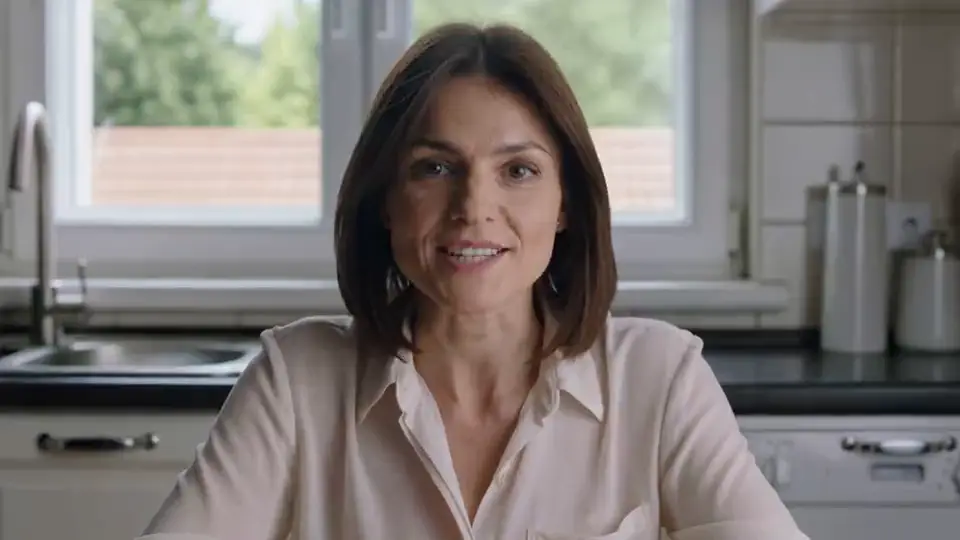

The most revealing clip mixed three languages. Kling delivered Polish and German with an American accent but clean English; MiniMax H3 delivered English and German with a heavy Polish accent. My impression: a model has one native-sounding voice and carries its accent into every other language. That is my interpretation of two clips, not an established fact. The usable takeaway: Kling is a fine choice for English lines and a poor one for Polish.
Why other languages break
Models learn to speak from their training material, which is dominated by English and Chinese. Kuaishou, for example, officially supports speech for Kling 3.0 in five languages only: Mandarin, English, Japanese, Korean and Spanish. Outside that list a model will still attempt your language, just with sounds borrowed from one it knows better.
I saw two kinds of failure:
- Right words, wrong accent. You can understand it, but every cluster of consonants sounds American.
- Broken words. Syllables run together, endings vanish, numbers become noise, and speech recognition cannot even tell which language it is.
Test your own language in ten minutes
My results cover Polish. For any other language, the same procedure works:
- Compose a hard line: the sounds that are typical for your language, a number, a proper name.
- Five-second render on each candidate, cheapest resolution, identical prompt, no retries.
- Run a transcriber such as Whisper, telling it which language to expect.
- Compare word by word with what you wrote, and also run language detection with no hint. If the detector guesses another language, your viewers will hear the same thing.
- Listen once for accent; a transcript can forgive what a native speaker would not.
Cost of the exercise is tiny: 5 × from $0.161 per second on H3 (768P) or 5 × from $0.0777 per second on Wan 3.0 (480P), for example.
Writing the prompt
Directions stay in English; only the dialogue, in quotes, uses the target language, and I name that language:
Medium close-up of a man in his forties at a workshop bench, looking into the camera.
He says clearly and calmly in German: "Guten Tag, heute zeige ich, wie man eine Dichtung wechselt."
Static camera, natural daylight, quiet workshop ambience, no music, no subtitles, no on-screen text.- Numbers spelled out, in the right grammatical form, so nothing is left to guesswork.
- Pace: a single short sentence fits 4-5 seconds. My twelve words fitted that window on every model; longer lines sound hurried.
- Say "no subtitles" every time, or the line may appear printed on screen.
- Describe the speaker's voice: age, tone, pace. Otherwise the voice is random.
Rendering it on Kadraris
Kadraris Studio: Video tab, MiniMax H3, your prompt, 768P while testing and 2K for delivery. The API equivalent:
curl https://kadraris.com/v1/generate \
  -H "Authorization: Bearer $KADRARIS_API_KEY" \
  -H "Content-Type: application/json" \
  -d '{
    "model": "minimax-h3",
    "input": {
      "prompt": "Medium close-up of a man in his forties at a workshop bench, looking into the camera. He says clearly and calmly in German: \"Guten Tag, heute zeige ich, wie man eine Dichtung wechselt.\" Static camera, natural daylight, no music, no subtitles.",
      "aspect_ratio": "16:9",
      "resolution": "768P",
      "duration": 6
    }
  }'
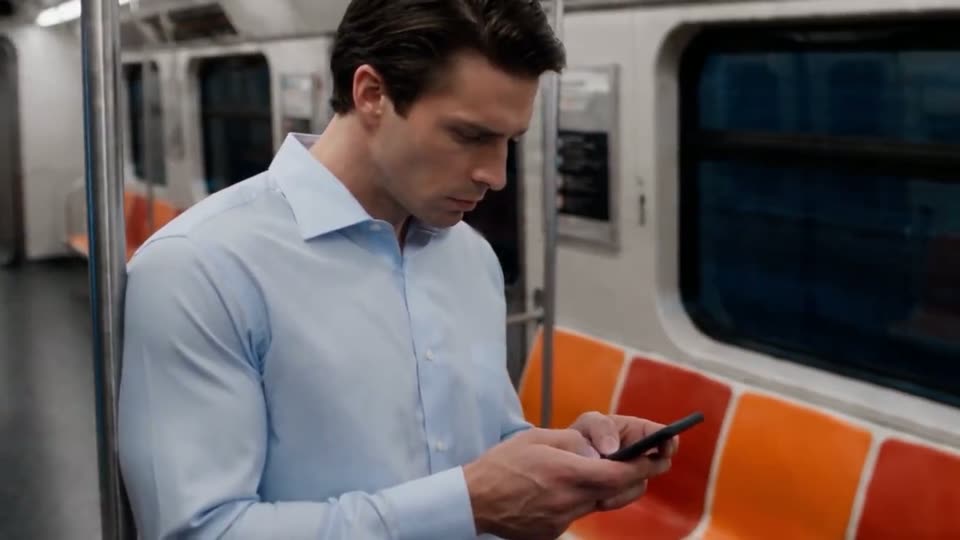
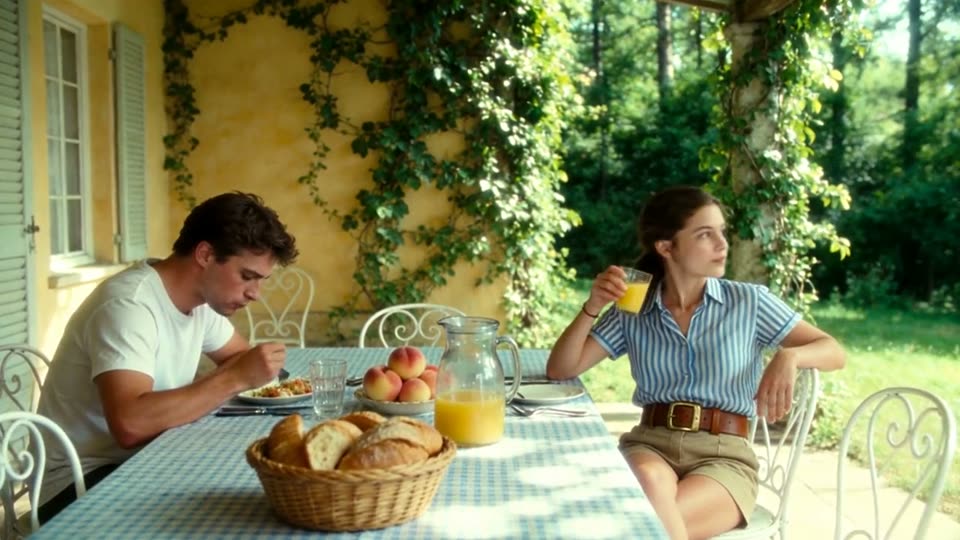
Without a start image, H3 needs an explicit ratio; adaptive is refused. If you start from a photo of the speaker, put it in image_url and the ratio follows the photo. Collect the file with GET /v1/tasks/{id}. Here is H3's picture quality at 2K from a test in August:
What a speaking clip costs
Seconds × rate × attempts. With dialogue I count on two or three attempts, since even a strong model occasionally drops a word:
| Model and tier | Seconds | Single | Triple |
|---|---|---|---|
| MiniMax H3, 768P | 6 s | 6 × from $0.161 per second | 18 × from $0.161 per second |
| FLUX 3 Video, 720p | 5 s | 5 × from $0.344 per second | 15 × from $0.344 per second |
| Grok Imagine Video 1.5, 480p | 6 s | 6 × from $0.088 per second | 18 × from $0.088 per second |
| Wan 3.0, 480P | 5 s | 5 × from $0.0777 per second | 15 × from $0.0777 per second |
All rates shown are entry tiers; 2K on H3 is pricier. You are never billed for a failed job, a $10 top-up is enough to begin, and money on the account has no expiry date. Other setups can be priced in the AI cost calculator.
When a separate voice track is the better idea
Generated speech is right for a short line from someone on screen. In other cases I keep picture and voice apart:
- A narrator who is never seen. Think how-to videos or voiced ads. I make the footage without sound, for example Kling 3.0 without sound at 720p (from $0.0963 per second), and lay a recorded or synthetic voice on top. Lip sync is irrelevant.
- Long scripts. A minute of talk means several clips, each possibly with a different voice. One narrator stays consistent.
- Product names and jargon. If the model trips over your brand, it may do so on every attempt. A human reads it correctly the first time.
- English plus subtitles. If your audience accepts it, a clean English line from Kling with translated subtitles often beats a garbled native one.
Phone recordings sound cleaner after a pass through Voice Cleaner (noise removal guide). Want the character to move to your recorded voice? Wan 2.7 Video takes image_url together with audio_url, though I have not checked its lip accuracy. Related: MiniMax H3 vs Kling 3.0, Kling 3.0 vs Veo 3.1, and for speech from a single still, AI talking photo.
Questions
Does writing the whole prompt in my language help?
I have not seen a benefit. I keep scene directions in English, which models follow reliably, and only the quoted spoken line in the target language, with the language named ("says in German").
Why did the transcript look fine but the clip sounds odd?
Speech recognition is tolerant of accents. A clip can score zero errors and still sound foreign to a native listener, which is why the last step of my test is simply listening.
Can I make one character speak two languages in one clip?
You can try, but in my three-language clip each model kept a single accent across all languages. For a bilingual video, render each language as its own clip, or use one language on screen and the other as subtitles.
Is MiniMax H3 the right choice for every language?
It was the most reliable affordable option in my Polish test, but every language behaves differently. Spend a few clips on the ten-minute test above before committing a whole project to one model.